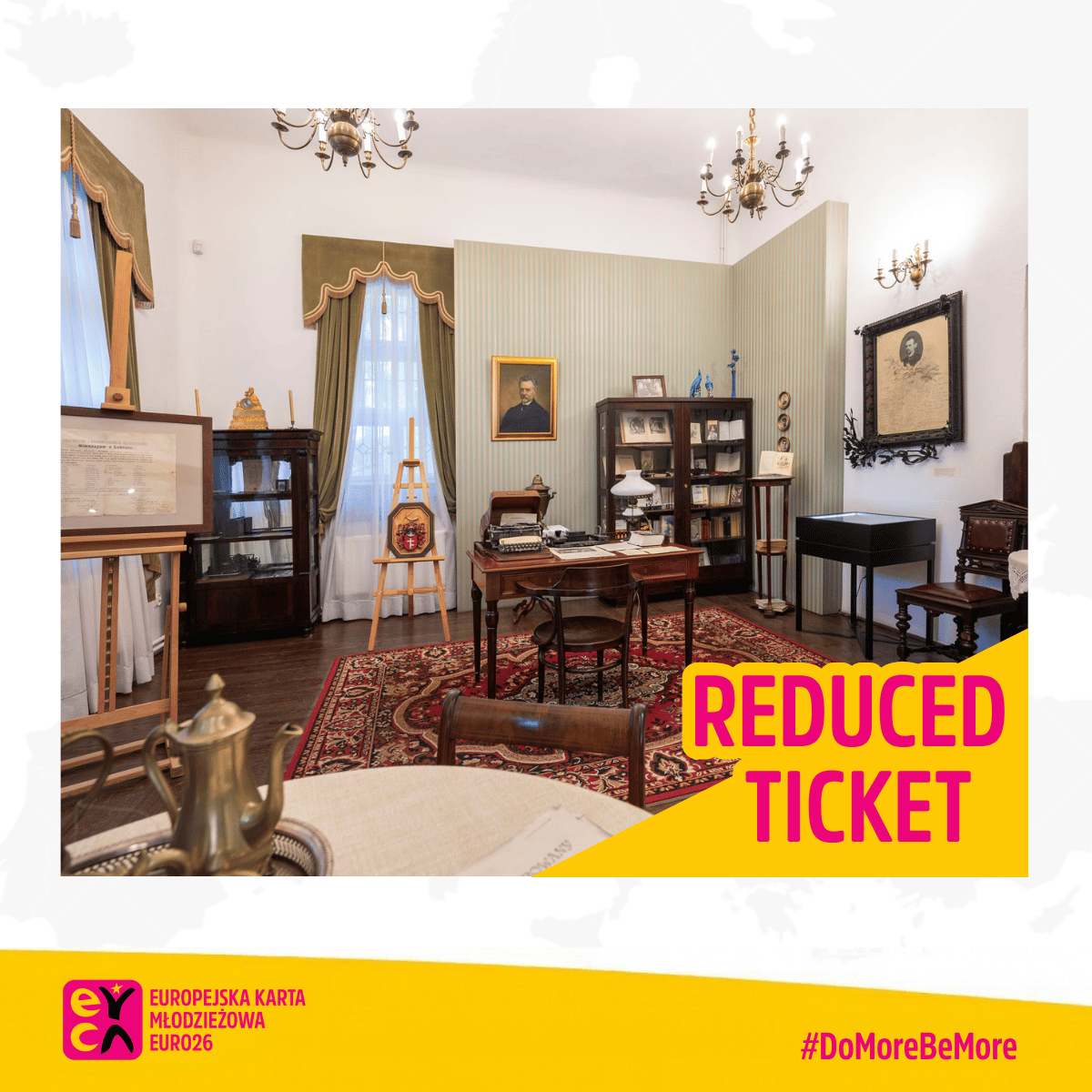
Bolesław Prus Literary Museum in Nałęczów - Branch of the National Museum in Lublin
Reduced ticket
Learning
For years, Nałęczów has attracted spa visitors and those seeking peace and relaxation. The town also occupies a special place in Polish literature. The Bolesław Prus Museum offers a fresh perspective on the author of The Doll, presenting him not merely as a canonical school author, but as a man full of passion, humour and life experience.
Today, the museum is housed in the historic Adam Żeromski Orphanage, one of Nałęczów’s most architecturally distinctive buildings. Designed by Jan Koszczyc Witkiewicz in the early 20th century, the building was originally intended as a school for children from low-income families. It combines elements of the Zakopane style with contemporary construction techniques. Remarkably, postcards from 1907 depicting the orphanage, sent by Prus himself, have survived. At the time, the writer could hardly have imagined that more than a century later the building would become home to a museum bearing his name.
The exhibition also traces the early life of Aleksander Głowacki. Visitors are guided from the future writer’s childhood in the Lublin region and the dramatic events of the January Uprising to the beginnings of his literary career and the adoption of the pseudonym “Bolesław Prus”. Through illustrations, quotations from The Doll and excerpts from his early journalism, visitors can discover how the author’s personal experiences influenced the characters and themes of his novels.
Particularly noteworthy are the original exhibits, including family photographs, letters, documents and memorabilia from the writer’s youth. Together, they reveal Prus as an ambitious, sensitive and deeply curious man. These authentic objects make the story of the author of The Doll feel close and personal.
Nałęczów od lat przyciąga kuracjuszy i miłośników spokojnego wypoczynku. Warto jednak zaznaczyć, że to także miejsce wyjątkowo ważne dla polskiej literatury. To tutaj znajduje się Muzeum Bolesława Prusa – przestrzeń, która pozwala spojrzeć na autora Lalki nie jak na szkolnego klasyka, lecz człowieka pełnego pasji, humoru i życiowych doświadczeń.
Muzeum mieści się dziś w zabytkowej Ochronce im. Adama Żeromskiego – jednej z najciekawszych architektonicznie budowli Nałęczowa. Zaprojektowany na początku XX wieku przez Jana Koszczyca Witkiewicza budynek powstał jako szkoła dla dzieci z niezamożnych rodzin. Łączy elementy stylu zakopiańskiego z nowoczesnymi jak na tamte czasy rozwiązaniami konstrukcyjnymi. Co ciekawe, zachowały się pocztówki z 1907 roku wysyłane przez samego Prusa, przedstawiające właśnie Ochronkę. Pisarz nie mógł wtedy przypuszczać, że po ponad stu latach stanie się ona siedzibą muzeum jego imienia.
Zwiedzanie muzeum jest jednocześnie podróżą przez młodość Aleksandra Głowackiego. Narracja prowadzi od dzieciństwa przyszłego pisarza na Lubelszczyźnie, przez dramatyczne doświadczenia powstania styczniowego, aż po początki kariery literackiej i narodziny pseudonimu „Bolesław Prus”. Dzięki ilustracjom, cytatom z Lalki oraz fragmentom wczesnej publicystyki można odkryć, jak osobiste doświadczenia autora wpływały na losy bohaterów jego powieści.
Warto przyjrzeć się oryginalnym eksponatom – fotografiom rodzinnym, listom, dokumentom i pamiątkom związanym z młodością pisarza. Dzięki nim można zobaczyć Prusa jako człowieka ambitnego, wrażliwego i niezwykle ciekawego świata. To właśnie autentyczne przedmioty sprawiają, że historia autora Lalki staje się bliska i bardzo osobista.
- prus@mnwl.pl
- Phone
- +48 (81) 501 45 52
- Web
- https://zamek-lublin.pl/muzeum-boleslawa-prusa/