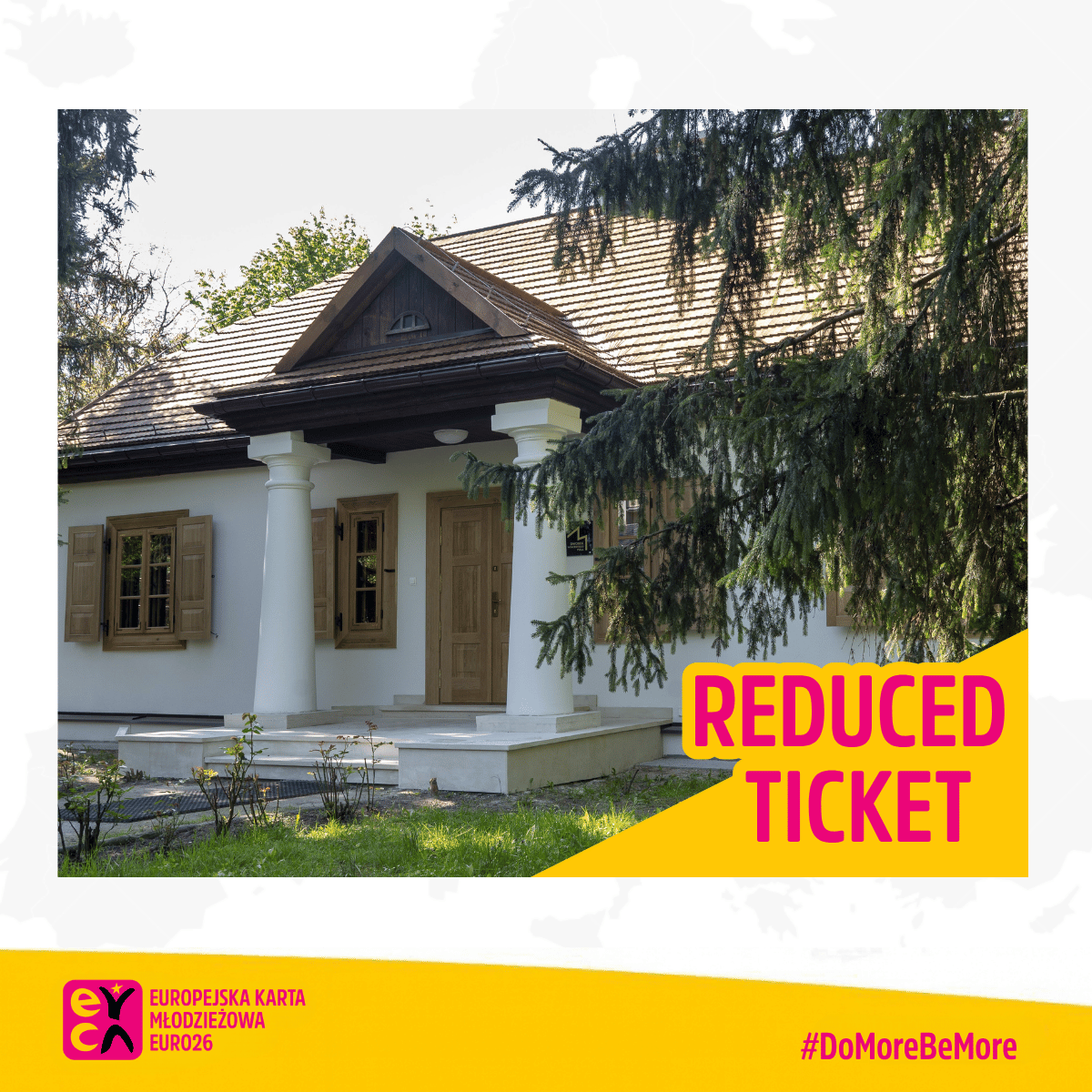
Manor House of Wincenty Pol Literary Museum - Branch of the National Museum in Lublin
reduced ticket
Learning
The museum is dedicated to Wincenty Pol (1807–1872), a 19th-century Romantic poet from Lublin, as well as a scholar, geographer and ethnographer. It is housed in a classicist wooden manor house originally built in the late 18th century on the Firlejowszczyzna estate near Lublin. The manor house belonged to Wincenty Pol’s father from 1804 to 1810. In 1860, it was returned to the family as a gift from the citizens of the Lublin Voivodeship. In 1969, the manor house was moved to its present location as part of a planned open-air museum complex. Although the present building is a reconstruction, its architecture and interior design exemplify the traditional Polish manor house of the former Polish-Lithuanian Commonwealth.
The institution houses collections relating to the life of its patron and other figures associated with him, including manuscripts, editions of works, correspondence, documents, iconography and other memorabilia. It also contains a significant collection of Polish-language globes dating from the 19th to the 21st century, reflecting Wincenty Pol’s interest in geography. A permanent exhibition is devoted to his life and work. The museum also organises temporary exhibitions, as well as educational and cultural events.
Muzeum jest poświęcone urodzonemu w Lublinie Wincentemu Polowi (1807–1872), XIX-wiecznemu poecie doby romantyzmu, a także krajoznawcy, geografowi i etnografowi . Mieści się w klasycystycznym drewnianym dworku, który pierwotnie został wzniesiony pod koniec XVIII wieku na terenie majątku Firlejowszczyzna pod Lublinem, a w latach 1804–1810 był własnością ojca Wincentego. W roku 1860 powrócił do rodziny jako dar Obywateli Województwa Lubelskiego. W 1969 roku przeniesiono go na obecne miejsce jako pierwszy muzealny obiekt planowanego tu wówczas skansenu. Mimo że w dzisiejszej postaci jest jedynie rekonstrukcją, to jego architektura i muzealna aranżacja wnętrz stanowią przykład tak charakterystycznego dla ziem dawnej Rzeczypospolitej dworu polskiego.
Placówka gromadzi zbiory dotyczące biografii swego patrona i związanych z nim innych postaci: rękopisy i wydania dzieł, korespondencję, dokumenty, ikonografię i inne pamiątki. Prócz tego powstała tu znacząca kolekcja polskojęzycznych globusów Ziemi od XIX po XXI wiek, będąca nawiązaniem do geograficznej profesji Wincentego Pola. Jego życiu i twórczości poświęcono wystawę stałą. Organizowane są również wystawy czasowe oraz prowadzona jest działalność edukacyjna i kulturalna.
- dworekpola@mnwl.pl
- Phone
- +48 (81) 747 24 13
- Web
- https://zamek-lublin.pl/muzeum-dworek-wincentego-pola/